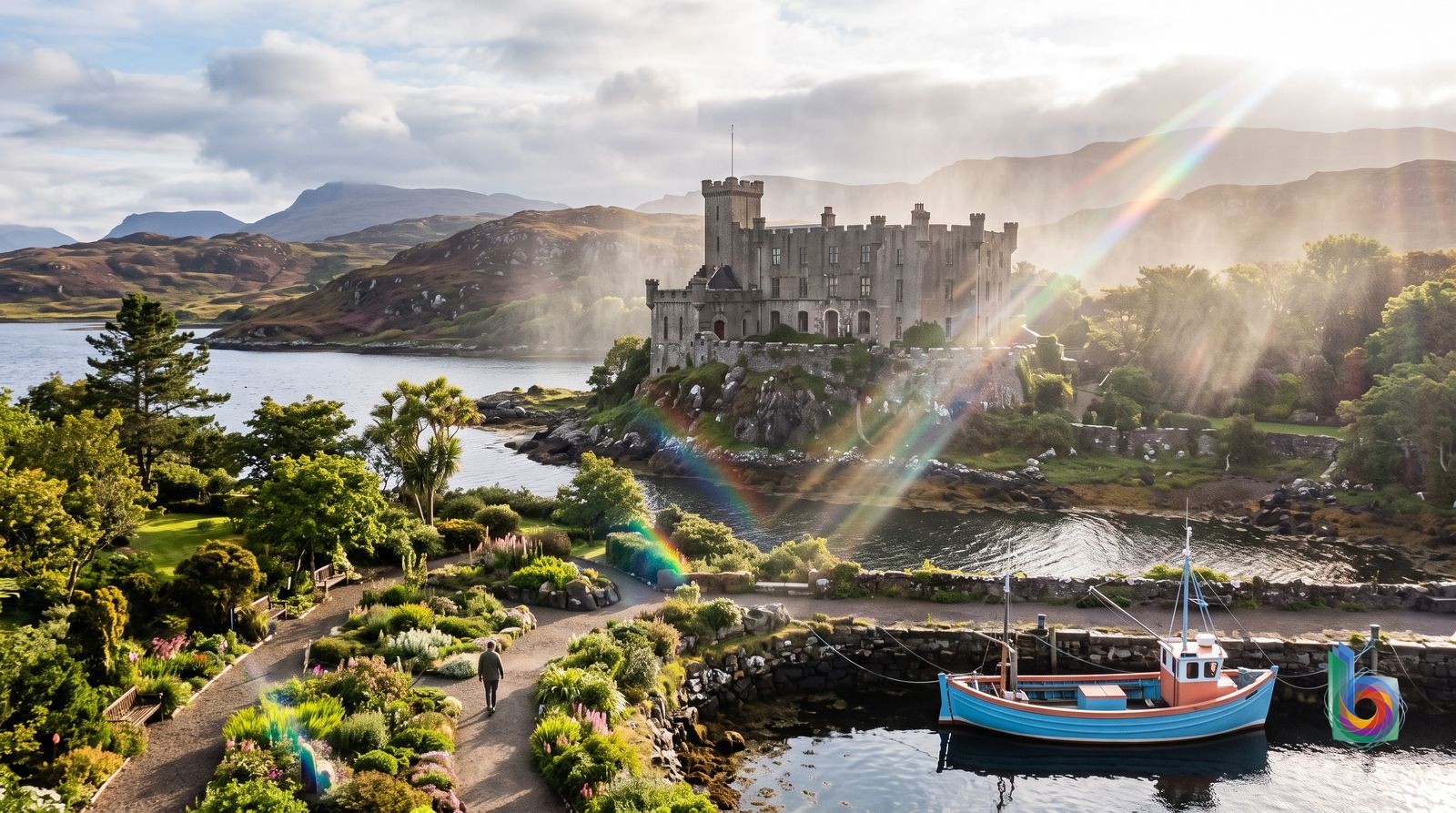
- Entry
- Free
- No ticket needed
- Price
- Free
- Best time
- May–September: use the long daylight for a full scenic-drive and walking day.
The Isle of Skye is worth it for extraordinary Highland scenery if you can stay at least three nights and treat weather as part of the trip, not an inconvenience. It is free to visit, but summer transport, accommodation and the famous-site car parks require planning.
Before you go
Stay at least three nights
Use separate days for Trotternish, the Cuillin/west coast and north-west or Sleat; a day trip cannot cover Skye’s distances without becoming a rushed driving checklist.
MoreBook the Mallaig ferry early
If taking CalMac’s Mallaig–Armadale ferry with a vehicle, reserve as soon as your travel date is on sale because summer vehicle spaces sell out; use the toll-free Skye Bridge if it is full.
Arrive before 8 a.m.
From May through September, reach Storr, Quiraing, Fairy Pools and Neist Point before 8 a.m. or visit late to find legal parking and avoid the busiest periods.
MoreUse designated passing places correctly
On single-track roads, pull into a passing place only to let traffic pass—never park there or block gates, verges or farm access.
More
Tickets and tours
Free to enter — no ticket needed.
About
The Isle of Skye (An t-Eilean Sgitheanach) is Scotland’s largest major Inner Hebrides island: about 1,656 km² of deeply cut coast, sea lochs, crofting settlements and mountain peninsulas centred on the Cuillin. It is a lived-in Gaelic landscape rather than a single purpose-built attraction, shaped by volcanic and Jurassic geology, glaciation, Norse-Gaelic and clan history, and the Highland Clearances; the Black Cuillin are the eroded remains of a magma chamber formed roughly 60 million years ago, while Trotternish exposes major Jurassic cliffs, landslips and pinnacles. Archaeological evidence of human presence reaches back about 14,000 BC.
Skye delivers an unusually dense range of Highland scenery—serrated mountains, waterfalls, cliffs, beaches, moorland, sea views and short or demanding walks—alongside villages, food, distilleries, galleries and boat trips. It suits travelers who can give it at least three nights, drive or plan transport carefully, and accept rapidly changing weather; skip it if you need train-based sightseeing, easy universal accessibility, spontaneous summer lodging, dependable sunshine or a quiet undiscovered-island experience. Famous locations can be crowded, with parking pressure especially acute in peak season.
Before you go
Questions worth settling
Do I need a ticket or booking to visit the Isle of Skye?
No. Skye is open land and inhabited island, not a gated attraction: it is free to visit, has no island-entry ticket, booking system, opening hours or island-wide visitor pass. Individual car parks, ferries, tours and privately operated attractions may have separate charges or booking rules.
Should I book the Mallaig–Armadale ferry in advance?
Yes, if taking a vehicle in spring through autumn. CalMac labels Mallaig–Armadale “booking essential,” and car spaces can sell out well ahead in peak summer. Book the specific sailing at https://www.calmac.co.uk/route-information/mallaig-armadale/ as soon as your accommodation dates are fixed. Arrive at least 20 minutes before departure with a vehicle, or 10 minutes before as a foot passenger; a late vehicle can lose its reserved space. If vehicle sailings are full, use the toll-free Skye Bridge instead.
What does it cost to get to Skye?
Crossing the Skye Bridge on the A87 is free and needs no booking. For the CalMac Mallaig–Armadale ferry, the published 2026 fares are £4 adult foot-passenger single (£8 return) and £13.25 per car single (£26.50 return), excluding the driver’s passenger fare; bicycles are free. These are transport fares, not admission to Skye. The Glenelg–Kylerhea ferry charges £5 per foot passenger, £6 single for bicycle plus cyclist, and £20 single/£30 return for a car carrying up to four passengers; pay aboard, with no advance booking required.
How many days should I allow for Skye?
Allow at least 2 nights only if you have a car and are happy with a selective trip. For a first visit, 3–4 nights is the practical minimum: use one day for Trotternish, one for the Cuillin/west coast, and one for north-west Skye. Stay 5–7 nights if hiking, photography, weather flexibility or a slower pace matter.
When is the best time to visit Skye?
April through September is best overall. April and May offer longer days, relatively lower rainfall by Skye standards and fewer midges than high summer; May is especially strong for green landscapes and hiking. June has very long days and wildflowers. July and August have the fullest services and warmest conditions but are extremely busy. September brings softer light and easing crowds, though weather can turn stormier. Visit in November–March only if you welcome short days, wind, rain and flexible plans for quiet landscapes or winter photography.
What time of day should I visit the famous sights?
For the Old Man of Storr, Quiraing, Fairy Pools and Neist Point, arrive before 8 a.m. from May to September, or go late in the day. This materially improves the chance of finding a legal parking space and reduces crowds in photographs. Trotternish viewpoints are particularly good around dawn; west-facing shores and cliffs are strongest in late afternoon and at sunset.