
This is Santa Fe’s most rewarding Museum Hill stop, especially for the astonishingly dense Girard collection of miniatures, toys, textiles, and folk objects. Give it real time rather than treating it as a quick add-on, and combine it with one other Museum Hill museum.
1.7h Walk upGo near opening, particularly on summer weekends and during the July Folk Art Market.
Buy on arrival; a Museum of New Mexico multi-museum pass can be good value if you will visit several participating museums.
Pairs with: Museum of Indian Arts & Culture · Museum of Spanish Colonial Art · New Mexico State Capitol

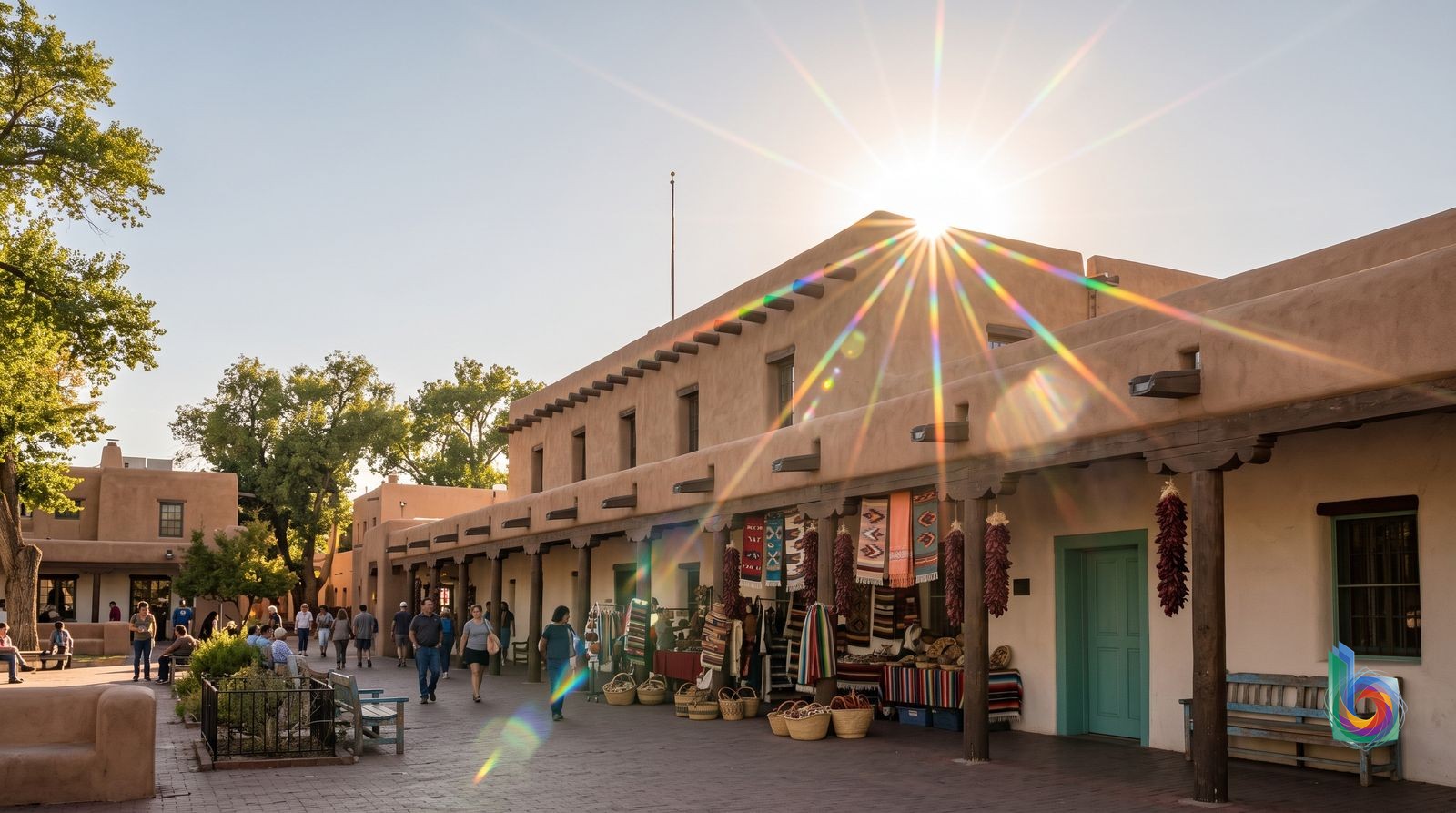
The Plaza is the essential orientation point for a first visit: it is the historic civic center, a people-watching stop, and the anchor for Santa Fe’s compact old core. Come more than once—briefly in the morning, then again in the cooler early evening when it feels most lived-in.
30m FreeEarly morning is calmest; early evening is best for atmosphere, though festival weekends are very busy.
Pairs with: The Cathedral Basilica of St. Francis of Assisi · Palace of the Governors at New Mexico History Museum · New Mexico Museum of Art

This is Santa Fe’s most immersive, contemporary counterpoint to its historic adobe-and-museum identity: a sprawling interactive art environment meant to be explored rather than merely viewed. It is especially worthwhile for families, curious adults, and anyone happy to surrender a few hours to sensory overload; traditional-art purists may prefer more museum time instead.
2.5h Book aheadChoose the first timed entry of the day or a late-evening slot when available.
Reserve a timed ticket in advance for weekends, school holidays, and summer; prime slots can sell out.
Pairs with: Santa Fe Railyard · Santa Fe Railyard Park · SITE Santa Fe

The 17th-century Palace is one of the city’s defining historic structures and faces directly onto the Plaza. See its historic rooms and, when artists are present, browse the juried Native artists selling work beneath the portal; pair it with the larger history museum behind it rather than duplicating time elsewhere.
45m Walk upVisit in the morning for a better chance to talk with portal artists before Plaza crowds build.
Admission is handled with the New Mexico History Museum and is covered by the Museum of New Mexico pass.
Pairs with: New Mexico History Museum · Santa Fe Plaza · New Mexico Museum of Art

The Cathedral is a defining visual landmark at the heart of old Santa Fe, with a Romanesque facade that notably differs from the city’s prevailing adobe style. Step inside for the devotional art and then continue across the street to MoCNA or toward the Plaza.
30m FreeVisit outside Mass times, ideally early morning, for a quieter interior.
Pairs with: Santa Fe Plaza · IAIA Museum of Contemporary Native Arts (MoCNA) · Loretto Chapel Museum

This is the essential art stop for understanding the artist most closely associated with northern New Mexico, with a focused collection that makes sense even for visitors who are not art specialists. Reserve enough time to look closely, then use nearby museums to broaden the story beyond O’Keeffe.
1.3h Book aheadBook the first entry of the day or visit later in the afternoon on a weekday.
Reserve online for preferred weekend and high-season entry times; walk-up availability can be limited.
Pairs with: New Mexico Museum of Art · Santa Fe Plaza · New Mexico History Museum

Canyon Road is Santa Fe’s classic gallery stroll, a long, walkable ribbon of adobe buildings, gardens, studios, and art shops rather than one single museum. Browse without feeling obliged to buy, and combine it with the nearby chapel cluster or the Cross of the Martyrs for a fuller walk.
2h FreeGo in the morning on a weekday; galleries are calmer and parking is easier.
Pairs with: San Miguel Chapel · Cross of the Martyrs · Loretto Chapel Museum

The museum gives useful context for everything else in Santa Fe: Pueblo history, Spanish colonization, the Mexican era, the Santa Fe Trail, and statehood. Use it as the substantive indoor stop in a Plaza-area walk, with the adjoining Palace as the historic artifact rather than a separate major museum visit.
1.5h Walk upOpening hour is quietest; it is also a useful refuge during afternoon heat or summer storms.
Tickets are normally easy to buy on arrival; it is included in the Museum of New Mexico pass.
Pairs with: Palace of the Governors at New Mexico History Museum · Santa Fe Plaza · New Mexico Museum of Art

Worth visiting both for the landmark Pueblo Revival building and for a broad collection that puts New Mexico artists in conversation with national art. It is more varied than an O’Keeffe-only experience, but works best as a focused one-hour stop rather than an all-day museum.
1.2h Walk upVisit at opening or late afternoon, when Plaza-area foot traffic is lighter.
Buy admission on arrival; the Museum of New Mexico pass covers it.
Pairs with: New Mexico History Museum · Santa Fe Plaza · Georgia O'Keeffe Museum

The former rail corridor has become Santa Fe’s more contemporary walking-and-browsing district, with galleries, shops, food, and the popular farmers’ market on market days. It is a good change of pace from the Plaza, but its appeal depends on what is open and whether a market or event is on.
1.3h FreeGo Saturday morning for the market atmosphere, or weekday late afternoon for a quieter stroll.
Pairs with: Santa Fe Railyard Park · Meow Wolf Santa Fe's House of Eternal Return · SITE Santa Fe

MoCNA is a concise but important corrective to viewing Indigenous art only as historic craft: its exhibitions foreground living Native artists and contemporary ideas. It is easy to fit into a Plaza-and-Cathedral walk and complements, rather than replaces, the Museum of Indian Arts & Culture.
1h Walk upWeekday afternoons are usually quiet; it is closed Tuesdays.
Admission is normally available at the desk; check current exhibition and closure days before going.
Pairs with: The Cathedral Basilica of St. Francis of Assisi · Santa Fe Plaza · Museum of Indian Arts & Culture

The short uphill walk rewards you with a broad view over adobe rooftops, the Plaza area, and the surrounding foothills. Go for the outlook, not for elaborate interpretation, and treat it as a quick scenic break from downtown museums.
35m FreeArrive near sunset for the best light, but return before dark and use care on the path.
Pairs with: Santa Fe Plaza · The Cathedral Basilica of St. Francis of Assisi · Canyon Road

The small chapel is famous for its unusual spiral staircase and is one of Santa Fe’s fastest, most photogenic historic stops. It is worth seeing if you keep expectations in scale: this is a brief architectural curiosity, not a deep museum experience.
25m Walk upGo right at opening or in the last hour before closing to avoid group-tour traffic.
Buy admission at the chapel; lines are possible during summer afternoons and tour-bus periods.
Pairs with: San Miguel Chapel · Oldest House Museum · The Cathedral Basilica of St. Francis of Assisi

Often described as the oldest church structure in the United States, this modest adobe chapel has greater historic resonance than spectacle. Pair it with the Oldest House and Loretto Chapel for a compact walk through early Santa Fe rather than making a special cross-town journey.
20m Walk upGo in the morning and verify it is open before walking over, particularly outside peak season.
A small admission/donation is generally handled on site; check current opening hours, which can be limited.
Pairs with: Oldest House Museum · Loretto Chapel Museum · Canyon Road

This Museum Hill institution provides the historical and cultural grounding for Pueblo and other Native arts, with particularly strong pottery and material-culture displays. It pairs naturally with the Folk Art Museum, while MoCNA downtown supplies the contemporary counterpart.
1.5h Walk upStart near opening, especially in summer and around major market weekends.
Buy at the museum; the Museum of New Mexico pass can cover admission if you are visiting multiple state museums.
Pairs with: Museum of International Folk Art · Museum of Spanish Colonial Art · IAIA Museum of Contemporary Native Arts (MoCNA)

This tiny adobe house is a quick, tangible link to the city’s early colonial-era fabric, not a destination for a long museum session. It is most worthwhile when you are already walking between San Miguel Chapel and the Loretto/Plaza area.
20m Walk upGo earlier in the day, as hours can be limited and the small rooms feel crowded quickly.
Admission is generally purchased on site; confirm seasonal opening days before making a special trip.
Pairs with: San Miguel Chapel · Loretto Chapel Museum · The Cathedral Basilica of St. Francis of Assisi

Known as the Roundhouse, the working state capitol is unusually worthwhile for its accessible collection of New Mexico art spread through public spaces. It is a short, free detour between downtown and Museum Hill, rather than a major time commitment.
35m FreeWeekday mornings are best for a quieter visit; allow extra time for security procedures.
Pairs with: Museum of International Folk Art · Museum of Indian Arts & Culture · Santa Fe Railyard

This linear park is more of a pleasant connective stroll than a standalone sightseeing destination. Use it to stretch your legs between the Railyard’s shops, galleries, market, and nearby contemporary-art stops.
30m FreeWalk it in the cooler morning or toward sunset; it is least appealing in midday summer sun.
Pairs with: Santa Fe Railyard · Meow Wolf Santa Fe's House of Eternal Return · SITE Santa Fe

This is a worthwhile high-desert escape for travelers who want a rugged landscape and a real hike beyond the city’s art-and-history circuit. It requires a car, sound footwear, water, and comfort with unshaded terrain, so it is best treated as a half-day outdoor choice rather than a casual downtown stop.
2h FreeStart early, especially from late spring through early fall; avoid exposed terrain during thunderstorms or peak afternoon heat.
#20Museum of Spanish Colonial ArtIf time
This compact Museum Hill museum makes the region’s Hispanic artistic traditions—saints, furniture, weaving, and domestic objects—legible in a way the larger museums cannot. It is a strong choice for visitors drawn to the Spanish-colonial layer of Santa Fe, but can be skipped by those with limited museum stamina.
55m Walk upVisit in the morning, before Museum Hill’s larger museums become busy.
Admission is normally available on arrival; check seasonal Monday closures and multi-museum pass eligibility.
Pairs with: Museum of International Folk Art · Museum of Indian Arts & Culture · New Mexico State Capitol

The Wheelwright offers a smaller, more intimate Native-art experience, with thoughtful exhibitions and an excellent trading-post shop. It is best for visitors who want to go deeper after the Museum of Indian Arts & Culture or who are considering buying art and want to see high-quality work in context.
1h FreeWeekday mornings tend to be especially peaceful.
Pairs with: Museum of Indian Arts & Culture · Museum of International Folk Art · Museum of Spanish Colonial Art

This Railyard cultural venue hosts rotating exhibitions, markets, and community events, so its value depends heavily on the current calendar. Check what is on before detouring; it is a worthwhile add-on for an event or exhibition, not a fixed first-timer essential.
45m Walk upEvent openings and weekend markets are liveliest but also busiest.
Entry and ticketing vary by exhibition or event; check the current program before visiting.
Pairs with: Santa Fe Railyard · Santa Fe Railyard Park · Meow Wolf Santa Fe's House of Eternal Return

This is a useful local green space with trails and play areas, but it does not compete with Santa Fe’s historic core, museums, or high-desert scenery for a short first visit. Choose it only if you are nearby, traveling with children, or need an easy outdoor break.
35m FreeMornings and late afternoons are most comfortable in warm weather.
Pairs with: Santa Fe Railyard Park · Santa Fe Railyard

A small hands-on collection of reptiles, amphibians, and invertebrates, it is most useful for families or visitors specifically interested in animals. It is not a priority over Santa Fe’s defining art, history, and architecture attractions.
45m Walk upGo on a weekday morning for the least crowded experience.
Walk-up admission is typical; check daily hours before going.
Pairs with: Santa Fe Plaza · Loretto Chapel Museum